Evergreen Guide Choosing a tree
Fraser Fir, Balsam, Douglas Fir or Pine? Choosing a Christmas Tree Type
Soft needles or sturdy branches? Citrus scent or none at all? Here is how Fraser, balsam, Douglas, noble, pine, spruce and cypress trees really differ.
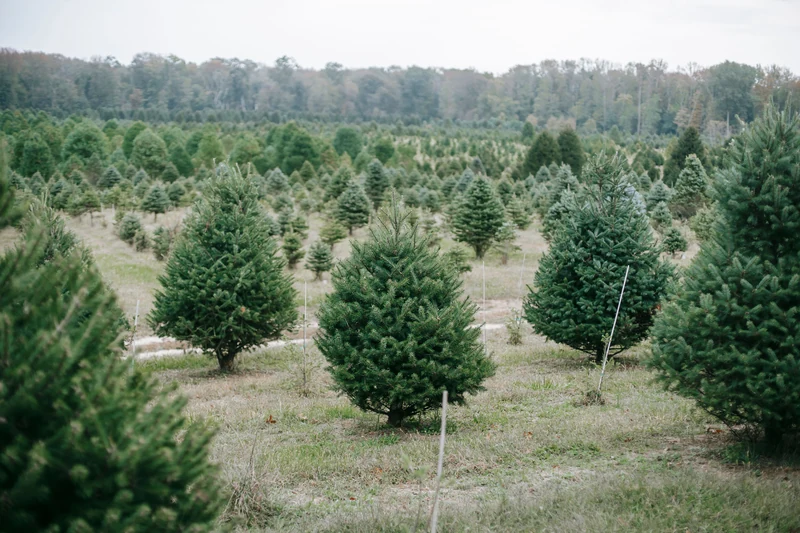
You step out of the car and the first thing you notice is the smell: cold air, damp soil and a hint of something sweet and resinous. Rows of trees roll off in every direction, some dark green, some silvery, some almost blue. The sign at the gate lists a few names, and you suddenly wish you knew what each one meant.
The short answer: for soft needles and a classic scent, look at Fraser, balsam or Canaan fir. For the heaviest ornaments, choose noble fir, Scotch pine or blue spruce. For the longest-lasting tree, choose Scotch or white pine, Fraser or noble fir. In the South, Virginia pine, Leyland cypress and Arizona cypress are the local favorites. Whatever you pick, a fresh tree kept in water matters more than the label on the row.
What is the difference between firs, pines, spruces and cypress?
Most trees on a farm fall into four families, and you can tell them apart with your hands.
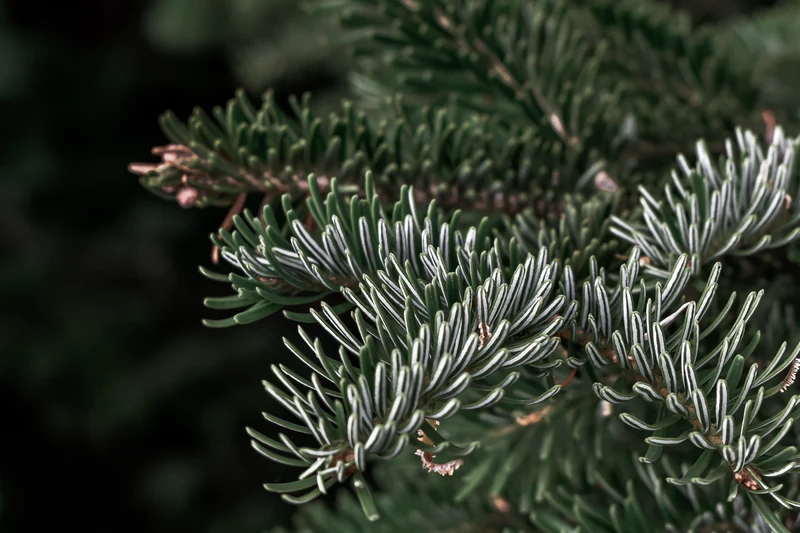
- Firs have flat, soft needles that attach one at a time, usually with silvery lines underneath. They are the family people think of first at Christmas, and they tend to hold their needles well.
- Pines have long needles that grow in bundles. Scotch pine has them in pairs, and white pine in fives. Pines are among the best needle-holders of all.
- Spruces have stiff, four-sided needles that feel sharp when you squeeze a branch. Spruces drop needles sooner than firs and pines, so they reward a quick trip from the farm to the stand.
- Cypress has tiny, scale-like foliage in feathery sprays, with no needles at all in the usual sense. It is a Southern specialty.
Two rules of thumb help. Pines and firs generally outlast spruces on needle retention. And the more you water a tree, the less its species matters. A tree whose cut seals over will struggle to drink, and a thirsty tree sheds.
Which firs will you find at Christmas tree farms?
Firs are the biggest group, and the ones people ask about most.
Fraser fir
Fraser is the tree many of us picture. The needles are soft, flat and about half an inch to an inch long, dark green on top with silvery bands underneath. The branches turn slightly upward, so the tree looks tidy and compact, and it keeps its needles very well. The scent is spicy and resinous. North Carolina grows more Fraser than any other state, and Michigan farms grow plenty too. The branches hold most ornaments with ease. If you hang very heavy glass or large keepsakes, you may want a stiffer-branched tree, or plan to tuck the biggest ones close to the trunk.
Balsam fir
Balsam is the old-fashioned Christmas smell: spicy, resinous and strong. The needles are flat and dark green with a silvery cast, the shape is a dense pyramid, and the needles last well. Balsam grows best where winters are cold, so you will find it at farms in the northern states. Its branches are a little less stiff than Fraser’s, so it suits lightweight and medium ornaments best.
Canaan fir
Canaan looks like a cross between Fraser and balsam, and in many ways it is. The needles are soft and flat, deep green on top and silvery below. The scent is light and classic, the shape is a neat pyramid, and the branches are stiff enough for most ornaments. It holds well through the season if you keep it watered. It started in the high country of West Virginia, and Michigan farms grow it too.
Douglas fir
Douglas fir has the softest feel of all. The needles are long, flat and blue-green to dark green, and they grow out in every direction, so the tree looks full and fluffy. Crush a needle and you get a sweet, citrusy scent. The shape is full and symmetrical, and the needles hold up well. The branches are moderately stiff, which makes it a good choice for medium-weight ornaments but not the heaviest ones. Douglas fir is grown across the Pacific Northwest, and an inland strain is planted at farms in the Midwest.
Concolor (white) fir
If you love a citrus scent, meet concolor. The needles are long and soft, curve outward, and range from blue-green to silvery. Crush one and you smell oranges or tangerines. Concolor holds its needles very well, and the branches go from flexible to moderately stiff. It is native to the western mountains and grows in the North Carolina mountains and in Michigan.
Noble fir
Noble is a favorite for heavy ornaments. The needles are about an inch long, twist upward to show their pale undersides, and give the tree a silvery blue-green look. The branches are short and stiff, so they carry weighty decorations, and noble is famous for staying fresh a long time after cutting. The shape is tall and very symmetrical. Most noble firs come from Oregon and Washington. Give a branch a sniff at the farm so you know how it smells to you.
Grand fir
Grand fir is the one to pick if scent is your priority. The needles are shiny, dark green and about an inch to an inch and a half long, and the fragrance is strong and citrusy when you crush them. The branches spread wide, so the tree looks full and layered when it has been shaped. You will find grand fir mostly in the Northwest and in Idaho and Montana.
Nordmann and Turkish fir
These two are less common, but a few farms grow them. Nordmann has long, flat, dark green needles with a waxy shine and a mild scent, and it holds needles very well. Turkish fir has glossy, dark green needles with silver undersides and a layered shape. Its branches are strong enough for heavy ornaments, and it usually keeps its needles well even in a warm room, though how well depends on where the seed came from. If you spot either one on a farm, ask how the farm’s trees have done in warm houses.
What about pine trees?
Pines are the stars of long-lasting trees. Most have a clean, outdoorsy pine scent, and most have stout, woody branches (white pine is the soft exception).
Scotch pine
Scotch pine is a long-time favorite at choose-and-cut farms in the East and Midwest. The needles are stiff, dark green and grow in pairs. The branches are stiff, so heavy ornaments sit comfortably, and the tree holds its scent through the season. Needle retention is excellent, and the needles stay on even when the tree dries. That is lovely for tidiness but a reminder that the water level in the stand is the real test of freshness.
Virginia pine
Virginia pine is the staple of Southern farms. The needles are short and twisted in pairs, the branches are stout and woody, and the pine scent is strong. It handles heavy ornaments well. It tends to be the shortest-lived of the pines, so water it faithfully.
White pine
White pine is the soft one. The needles are long, silky and bluish-green, in bundles of five, and the tree is very full. The needles hold well, and white pine has very little fragrance, which makes it a good pick for anyone sensitive to strong scents. The branches are flexible, so it suits light ornaments and lots of lights rather than heavy glass. It grows across the northern states and down the Appalachians.
Which spruces are Christmas trees?
Spruces give a crisp, formal look but come with one warning: those needles can be prickly.
- Colorado blue spruce has sharp needles in colors from blue-green to silvery blue. The shape is symmetrical and narrow, the branches are very stiff, and it holds the heaviest ornaments. It keeps needles better than other spruces, but only if it never runs out of water. It has little scent, and the sharp needles are not ideal for homes with small children.
- Norway spruce is a shiny, dark green cone with drooping branchlets and a strong scent. It loses needles quickly unless it is cut fresh and watered well, so this is a tree to buy straight from a farm.
- White spruce has short, stiff, blunt needles and a good cone shape. Crushed needles smell unpleasant, and the tree is often called “skunk spruce,” so many families skip it. It grows wild across the northern states, and the Black Hills of South Dakota are famous for it.
- Serbian spruce is a slim tree with upswept branches and stiff needles. It is rare at farms. Treat it like other spruces: buy it fresh and keep it watered.
What are the Christmas trees of the South?
Heat and humidity make firs and spruces tough to grow in much of the South, so Southern farms have their own lineup.
- Leyland cypress is the most popular tree in the Southeast and is almost always sold at choose-and-cut farms. The foliage is soft and feathery, dark green to gray, in flat sprays, and the scent is faint. It has no sap, and it is not a pine or a fir, which makes it a friendly choice for anyone who reacts to sap. The limbs are flexible, so use light ornaments. A farm attendant will usually do the cutting for you with a chainsaw.
- Arizona cypress comes in a few forms. Carolina Sapphire is silvery blue to teal, bushy, and smells of citrus. Blue Ice is steel blue, compact and columnar. Neither has much room inside for ornaments, so decorate the outer branches. It is mostly sold at choose-and-cut farms across the South.
- Murray cypress is a close relative of Leyland and grows in the same places.
- Virginia pine (above) is the other Southern favorite, and some farms also grow white pine in the cooler hills.
Leyland dries faster than Fraser, so cutting it yourself at the farm, and getting it into water the same day, is the best way to buy it.
How do the tree types compare side by side?
| Tree | Needles and look | Fragrance | Branches | Needle retention | Commonly grown |
|---|---|---|---|---|---|
| Fraser fir | Soft, flat, dark green with silvery undersides; neat pyramid | Spicy, resinous | Strong, turn upward | Very good | North Carolina mountains, Michigan |
| Balsam fir | Flat, dark green with silver cast; dense pyramid | Strong, spicy | Less stiff | Good | Cold northern states |
| Canaan fir | Soft, flat, deep green; neat pyramid | Light, classic | Moderate to strong | Good | West Virginia highlands, Michigan |
| Douglas fir | Very soft, blue-green; full and symmetrical | Sweet, citrusy | Moderate | Good | Pacific Northwest, some Midwest farms |
| Concolor (white) fir | Long, soft, blue-green to silver | Citrus, orange-like | Flexible to moderate | Very good | North Carolina mountains, Michigan, western states |
| Noble fir | Silvery blue-green; tall and symmetrical | Ask at the farm | Short and stiff | Excellent | Oregon, Washington |
| Grand fir | Shiny dark green; full when shaped | Strong, citrusy | Wide-spreading | Better than Douglas fir | Idaho, Montana, Northwest |
| Nordmann and Turkish fir | Glossy dark green, silvery undersides | Mild | Strong for heavy ornaments (Turkish) | Very good, depends on seed source | A small number of farms |
| Scotch pine | Stiff, dark green, in pairs | Pine, lasts all season | Stiff | Excellent | East and central states |
| Virginia pine | Short, twisted, in pairs | Strong pine | Stout and woody | Shorter than other pines | The South |
| White pine | Long, soft, blue-green, in fives; very full | Very little | Flexible | Excellent | Northern states, Appalachians |
| Blue spruce | Sharp, blue-green to silvery blue; narrow | Little | Very stiff | Best of the spruces if never dry | East and Rockies |
| Norway spruce | Shiny dark green; cone shape | Strong | Droopy branchlets | Poor unless fresh and watered | Northeast |
| Leyland cypress | Feathery, dark green to gray | Faint | Flexible | Dries faster than Fraser | Southeast |
| Arizona cypress | Silvery blue to teal (Carolina Sapphire); steel blue (Blue Ice) | Citrus-like | Little room inside for ornaments | Ask at the farm | The South |
Which tree fits your family?
| What you want | Good choices | Notes |
|---|---|---|
| Heavy ornaments | Noble fir, Scotch pine, Virginia pine, blue spruce, Turkish fir | Short, stiff branches carry glass and keepsakes. Fraser and Canaan handle most ornaments. |
| Soft needles for children | Douglas fir, Fraser, balsam, Canaan, concolor, white pine | Skip blue spruce; the needles are sharp. |
| Strongest fragrance | Balsam, Fraser, grand fir, Virginia pine, Douglas fir, concolor | Concolor smells of citrus, balsam is spicy and resinous. |
| Longest-lasting | Scotch pine, white pine, noble fir, Fraser, concolor | Water makes the biggest difference of all. |
| Sap or scent sensitivity | Leyland cypress, white pine | Leyland has no sap; white pine has little aroma. |
| Southern farms | Virginia pine, Leyland cypress, Arizona cypress | Cut your own and set it in water the same day. |
How do you make any tree last longer?
Species gives you a head start; care does the rest. Make a fresh cut across the base of the trunk, stand the tree in water as soon as you can, and keep the stand full. Plain water is all a tree needs. A tree can drink a gallon on the first day, so check the stand every morning. If you or a family member is sensitive to dust or pollen, rinse the tree outdoors with a hose and let it dry fully before it comes inside.
When you get to the farm, test a branch: run it through your closed hand, and give the tree a gentle bounce. Then pick the tree you love most. A tree you love beats the perfect species every time.
Where to find each kind of tree
Here is where the farms in our directory grow or sell each kind of tree. Open a state to compare its farms, then check with the farm that your favorite is still in stock.
| Tree | Farms | Most farms in |
|---|---|---|
| Fraser fir | 758 farms in 38 states |
|
| Balsam fir | 368 farms in 28 states |
|
| Canaan fir | 339 farms in 27 states |
|
| Douglas fir | 304 farms in 28 states |
|
| Concolor (white) fir | 313 farms in 27 states |
|
| Noble fir | 138 farms in 17 states |
|
| Nordmann and Turkish fir | 140 farms in 23 states |
|
| Grand fir | 85 farms in 17 states |
|
| White pine | 366 farms in 32 states |
|
| Scotch pine | 173 farms in 28 states | |
| Virginia pine | 75 farms in 14 states | |
| Blue spruce | 324 farms in 31 states |
|
| Norway spruce | 204 farms in 25 states |
|
| White spruce | 118 farms in 18 states |
|
| Leyland cypress | 91 farms in 15 states |
|
| Arizona cypress | 86 farms in 13 states |
|