Evergreen Guide Caring for your tree
What to Do With Your Real Christmas Tree After Christmas
Your tree still has a job to do. Here is how to take it down cleanly and give it a second life as mulch, shelter or fish habitat.
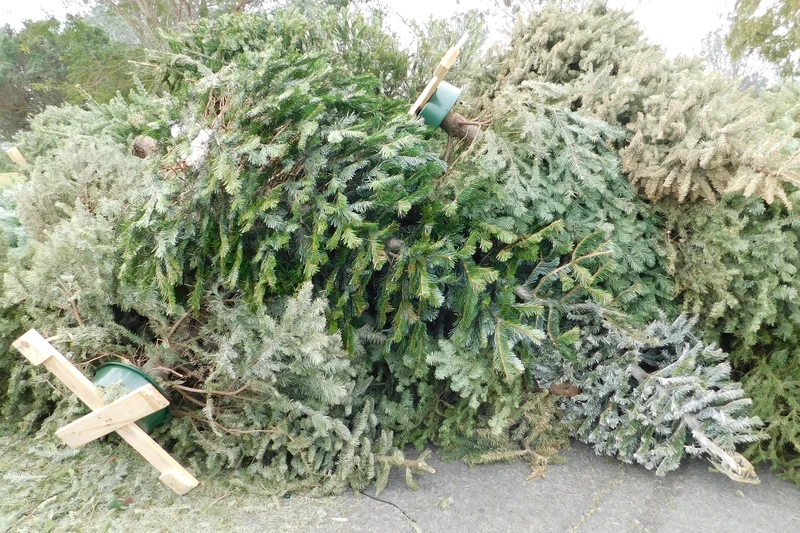
The presents are unwrapped, the house is quiet, and the tree in the corner has gone from the star of the show to a slightly crunchy guest. Every year the same question comes up: what do we do with it now? The good news is that a real tree is one of the easiest holiday things to put to good use, and it will keep giving back long after the ornaments are in their boxes.
The short answer: take the tree down when it is dry, or soon after the holidays, strip every ornament, hook, tinsel strand and light, slide it into a tree bag or onto a sheet, and take it out trunk end first. Then ask your city about curbside collection or a drop-off, or use it at home as mulch, a wildlife shelter or a garden blanket. Never burn it in a fireplace. If you have a living tree, keep it indoors for no more than 7 to 10 days.
When should you take the tree down?
Take it down when the needles are dry, brittle or falling off in your hand, or soon after the holidays, whichever comes first. A well-watered tree can stay fresh for several weeks, but it does not stay that way forever, and a dry tree is a fire hazard. The days with the highest share of tree fires fall after Christmas, which is a good reason not to let it linger.
Another reason to move on is the air in your home. A tree can pick up dust and mold the longer it stays up, and mold can keep growing indoors. If someone in your family gets stuffy or sneezy in January, the tree may be part of the reason.
How do you get the decorations off?
Take everything off before the tree goes anywhere. That means:
- Ornaments and their hooks, which are small and easy to lose in the needles.
- Tinsel, garland and ribbon.
- Strings of lights. Unplug them first and wind them gently from the top down.
- Hangers, bows, paper chains and any painted or glittery decorations.
Do not skip this. Recycling programs, chippers and even wildlife uses all depend on a tree that is clean. A tree with tinsel or glitter left on it cannot go into mulch, and metal hooks and wire do not belong in a chipper. Flocked or sprayed trees (the ones with artificial snow) can be harder to recycle, so ask your program before you put one out.
Take a flashlight and run your hands over the branches one last time. Hooks hide in the needles.
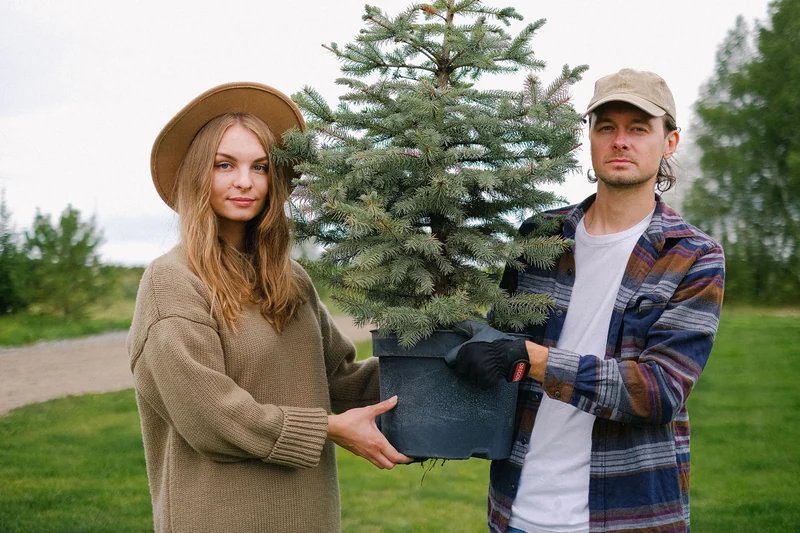
How do you get the tree out without a mess?
A dry tree sheds a trail of needles, so a little planning goes a long way.
- Let the water bowl dry out, or carefully empty it before you move the tree. You do not want to slosh water across the floor.
- Put a tree bag over the tree, or lay an old sheet or a shower curtain under it. A tree bag is a large plastic bag made for the job. Slide it up from the bottom while the tree is still standing, then lift the whole tree out of the stand.
- Carry the tree out trunk end first, or drag it by the trunk, so the branches fold down and the needles trail behind you into the bag.
- Cut a big tree into pieces and bag them one at a time if it is too heavy or too tall to move in one go.
- Vacuum or sweep the path and the spot where the tree stood, and wipe up any sap.
Some farms give a tree bag at checkout in November. Save it, or keep one in the closet for January.
Can you leave the tree at the curb or take it to a drop-off?
Very likely. Many cities collect trees curbside in the weeks after Christmas, and others have drop-off sites, often a park, a transfer station or a public works yard. The trees are usually chipped into mulch or compost, and some communities give the mulch away.
Rules vary from city to city, so ask yours:
- When are the collection dates, and when do they end?
- Is there a size limit? Some places ask you to cut a big tree into sections.
- Must the tree be bare? Programs want the tree bare, with no tinsel, lights or ornaments, and many do not take flocked trees. Ask whether the tree may stay in a bag or must be loose.
- Do you leave it at the curb, or take it to a drop-off?
- Is there a charge?
Look on your city or county website, or give the public works office a call. Some nonprofits also pick up trees, so ask about those too.
Can you chip it for mulch?
Yes. Most live trees can be chipped or shredded into mulch if you have a chipper or a neighbor who does. A thick layer of tree mulch on garden beds and paths lasts a long time and helps the soil hold moisture and stay at an even temperature. You can add small amounts to a compost pile too.
If you do not have a chipper, many cities have a free mulch center where you drop the tree off and can come back later to pick up a load of mulch.
How can a tree help wildlife?
A tree in the yard is a gift to birds and other small creatures in the cold months.
- Stand it up in a quiet corner of the yard, away from the house, as shelter for songbirds from cold and predators. Hang feeders on the branches, such as a pine cone rolled in peanut butter and birdseed.
- Make a brush pile. Lay the tree on its side, or cut it up and stack the branches in a quiet corner. As it slowly breaks down, it gives shelter to birds, insects and small animals.
If you have a pond, you may be able to sink the tree as fish habitat, but only with the pond owner’s permission, and only if local rules allow it. Remove every decoration first. Tie the whole tree to a weight, such as a cement block, so it sinks and stays put. Do not use storm-water ponds or public lakes without a program or permission, because rules vary and some places do not allow it. Some wildlife agencies and community groups collect trees for habitat projects, and some use them to help stabilize stream banks and shorelines. A phone call to your local conservation office will tell you whether a program exists.
What else can you do with it in the garden and at home?
- Cover perennial beds. Lay evergreen boughs over tender plants to protect them from freezing temperatures and drying winter wind.
- Make coasters or ornaments. Cut thin slices off the trunk, let them dry completely and finish them with varnish so the growth rings show.
- Keep a piece for next year. One section of dried trunk can become a yule log for an outdoor fire next Christmas.
- Use the needles. Fresh green needles can fill small scent sachets for drawers.
- Save a trunk slice. Count the rings. A cut disc of seven to ten growth rings makes a nice keepsake.
Can you burn a Christmas tree in the fireplace?
No. Do not burn it in a fireplace or a wood stove. Dry evergreen branches can burst and flare violently, and the resin can add to the creosote buildup in your chimney, which can lead to a chimney fire. If you want to burn tree wood at all, cut it up and let it dry for several months, burn it only outdoors, in a fire pit, and only where local rules allow.
What if you have a living, potted tree?
A living tree needs a plan, because it has to go back outside. Here is the schedule:
- Keep it indoors for no more than 7 to 10 days. A longer stay in a warm house can end its winter rest, and then the cold can hurt it when it goes back out.
- Ease it in and out. Before and after it comes inside, let it spend a few days in an unheated, sheltered place such as a garage, a shed or a porch. Keep the root ball moist the whole time.
- Set it on a few stones or a board, in a leakproof pot or tub, so it never sits in standing water.
- Plan the planting. Where winters are mild and the ground stays workable, plant it as soon as possible after the holidays, not in spring. Dig a hole at least twice as wide as the root ball and no deeper than the root ball, set the tree in, backfill, and cover the soil with 2 or 3 inches of mulch.
- In cold regions, where the ground freezes, dig the hole before the ground freezes, in the fall. If you did not, keep the tree outdoors in a sheltered spot, mulch the roots, and keep the root ball moist until the soil thaws in spring.
- Keeping it in the pot for the winter is a good plan in those cold regions. Leave it in its pot in the unheated space, check it for water from time to time and plant it in spring.
Remember that most Christmas tree species grow 30 to 50 feet tall, so choose a planting spot with room to grow and away from power lines and buildings.
A short after-Christmas checklist
- Take it down when it is dry or soon after the holidays.
- Remove every ornament, hook, tinsel strand and light.
- Empty the water bowl, bag the tree and carry it out trunk end first.
- Ask your city about curbside pickup or a drop-off.
- Chip it, shelter wildlife with it or cover your garden beds with the boughs.
- Never burn it in the fireplace.
- Living tree: no more than 7 to 10 days inside, then a plan for planting.