Evergreen Guide Planning your farm visit
How to Get a Christmas Tree Home Without Damaging Your Car
A good tree deserves a safe ride. Here is how to wrap it, tie it down and drive it home without scratches, surprises or a loose tree on the road.
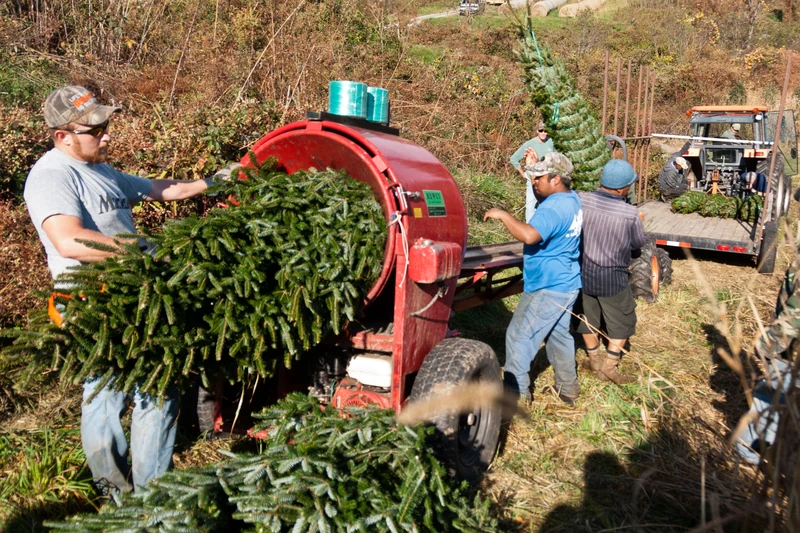
You have the tree you love, sawed and shaken and standing by the farm’s loading area, and now comes the part nobody practices: getting it onto the car. A few smart steps will keep the paint, the doors and the tree itself in good shape, and keep the tree on the car all the way home.
The short answer: have the tree netted, put a blanket or tarp under it on the roof, lay it with the trunk end facing the front of the car, and tie it down in three places (near the bottom, the middle and the top) with strong rope or ratchet straps tied to a roof rack or through the door openings, never through open windows. Pull on it from every side, drive slowly and avoid the highway if you can. At home, carry it in trunk end first and make a fresh cut before it goes in water.
Why does the tree need to be netted?
Netting, also called baling, squeezes the branches in against the trunk. A bundled tree is much slimmer, so it is easier to carry, easier to tie and easier to slide into a car or through your door. Branches are also less likely to snap or to catch the wind.
Ask the farm whether it nets trees and whether there is a charge. Some farms pull the tree through a cone that wraps it in netting or twine, and a baled tree can come out under two feet across. If the farm does not net, you can wrap the tree yourself with a tarp, a sheet or an old blanket and tie it with rope.
Here is a helpful trick: you can leave the netting on until the tree is in its stand. Doing it this way makes it far easier to set up. Before the farm nets it, flag the side you like best with a ribbon so you know which way to turn it toward the room.
What do you need before you load?
Bring these from home:
- Strong rope or ratchet straps. Skip the thin twine that some lots provide; it can snap or stretch.
- An old blanket or tarp to protect the roof and to cover the tree.
- Gloves, because the cut end is sticky.
- A flag or bright cloth, if the tree will stick out past the bumper by more than a couple of feet.
Also, measure your vehicle before you choose a tree. A tall tree needs a roof rack, a truck bed or a big van, and some trees are simply too big for a small car. Measure the space inside the car and the length of the roof, and think about whether the tree will fit through the doors at home.
Roof rack or bare roof: which is better?
| Vehicle | Best method | Tips |
|---|---|---|
| Roof rack or cross rails | Tree on the rack | Tie to the rails or rack, not to the roof. Make sure the rails are installed properly. |
| Bare roof (car) | Tree on the roof, on a blanket | Open all the doors, run the rope through the door openings, close the doors on it and check that they latch. Never use windows. |
| SUV, van or minivan | Inside, if it fits | Fold down the seats, lay down a tarp and slide the tree in trunk end first. |
| Pickup truck | In the bed, tied down | Tie it at the base, center and top to the tie-down points. Don't leave it loose. |
A bare roof is the least comfortable choice. It can work for a small, netted tree, but the rope can rub the paint and wear the door seals. If you only have a small car and a big tree, ask whether the farm can deliver, or borrow a truck for the day.
How do you protect the roof?
Lay an old blanket or a moving pad over the roof, wide enough that no edge of the tree touches the paint. A tarp works too. Take your time with this step. The cut end of a tree is rough and sticky, and a branch tip that rubs back and forth on the roof for twenty minutes can scuff the finish.
Put the tree on the blanket with the trunk end facing the front of the car, and the top toward the back. This keeps the wind from pushing the branches upward and bending them, and it keeps the tree from acting like a sail.
How do you tie it down?
Think of three points: the base of the trunk, the middle and the top.
- Tie to something solid. If you have a rack or rails, loop the strap around the rack. If you do not, open all the doors, throw the rope over the tree and through the door openings, then close the doors on it. Check that the doors latch and that the rope is not caught in the seal.
- Go around the trunk, not just over the branches. Loop the line around the trunk above a branch, so it cannot slide forward or back.
- Never tie through open windows. Use the door openings, with the doors closed on the rope, or use a rack. Rope in a door can wear the rubber seal over time, which is one more reason a rack is worth it.
- Don’t overtighten stretchy cords. Bungee hooks can straighten and pop loose.
- Tie it in more than one place. One line is not enough. Three secure points are better than two.
- Tug the tree from every side. Grab the trunk and the top, and try to push it forward, back and sideways. If anything moves, tighten it.
If the tree sticks out well past the bumper, tie a bright flag or cloth to the end so drivers behind you can see it.
If you are not sure about your knots, ask the farm. Ask whether the farm helps lift the tree onto the roof and tie it on. An attendant can give you a hand with the lifting, but you are the one driving, so give each knot your own tug before you pull out.
What if the tree rides inside or in a truck bed?
Inside. For an SUV, van or minivan, fold down the seats, lay a blanket or tarp down to catch needles and sap, and slide the tree in trunk end first. Tie it to the cargo hooks if you can, so it does not slide when you brake. A tree inside the car is out of the wind and stays cleaner and fresher.
Truck bed. Lay the tree down with the trunk toward the cab and tie it at the base, center and top to the bed’s tie-down points. Do not just drop it in the bed and hope: a loose tree can slide, flap and fly out. If the tree is long, tie the end that sticks out past the tailgate with a flag.
Covering. A tarp, sheet or sturdy plastic over the tree on the drive home keeps it from drying out in the wind. On a warm, windy day, a tree can dry out surprisingly fast, so cover it, especially on a long drive.
What can the farm’s loading help do, and what can’t it do?
Farm staff are good at the heavy parts. They can shake and net the tree, carry it to your car and often lift it onto the roof. Some will wrap the tree and give you a hand with the first knots.
What they cannot do is decide whether your tie-downs are right for your car. They do not know your roof, your rack or how far you are driving, and the tree is yours the moment you pay. So bring your own rope or straps, say what you have and ask for help with the lifting, then finish the job yourself. Check the knots, give the tree a good shake from every side and ask for a second opinion if something looks loose. A minute of fussing in the lot beats a tree in the road.
How should you drive with a tree on your car?
Slowly, and with a little extra attention.
- Skip the highway if you can. Fast air pushes hard on a tree and can loosen even a good tie-down and damage the branches. Back roads are better.
- Leave extra room to brake and take corners gently.
- Check it after a mile or two. Pull over somewhere safe, give the tree a tug and tighten anything that has loosened.
If you are going a long way, stop and check again.
How do you carry the tree into the house?
Carry the tree in trunk end first. That way the branches fold back along the trunk as you go, instead of spreading and catching on the door frame, and you are not dragging the cut end through its own needles. Keep the netting on until the tree is standing in its stand, and spread a sheet or an old shower curtain along the path to catch needles.
Once you are inside, cut the netting from the bottom up and let the branches settle. Give them a few hours to open up before you decorate.
What do you do once the tree is home?
Make a fresh cut right away if the tree was cut more than a few hours ago. Slice about a half inch off the bottom, straight across, and put the tree into a stand that holds at least a gallon of water. If you cannot set it up yet, stand it in a bucket of water in a cool, shady place out of the wind, like an unheated garage.
Then fill the stand and check it every morning. A tree that has been snug in a net and tied down well should arrive in great shape, with a lot of its water still in it.