Evergreen Guide Caring for your tree
How to Keep a Christmas Tree Fresh: Watering Myths and What Really Works
Sugar, aspirin, hot water, a drilled hole? Skip the folklore. Here is what actually keeps a real tree green and fragrant, and what does nothing at all.
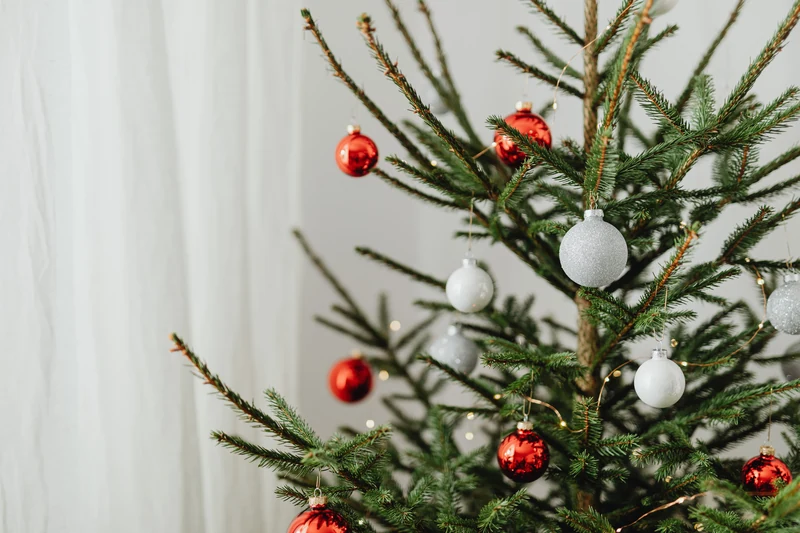
Every family has a tree-saving secret. Grandpa swore by a spoonful of sugar, a neighbor drops in an aspirin, and somebody’s aunt tops off the stand with warm water every night. The truth is simpler, and a lot less work: a tree stays fresh when it can drink, and it drinks when its cut is open and its stand is full of plain water.
The short answer: make a fresh straight cut across the bottom of the trunk (about half an inch) if the tree has been cut more than a few hours, get it into a stand that holds at least a gallon, fill it with plain water, and check it every morning, never letting the water fall below the cut. Keep the tree away from heat. Nothing you add to the water, and nothing you do to the trunk, beats this.
Why does the fresh cut matter, and how long do you have?
A tree takes up water through the freshly cut surface of the trunk. When the cut is exposed to air, the cells at the bottom get blocked with resin, and within a few hours the tree stops drinking. That is why a tree can sit in a full stand and still dry out.
Here is the rule of thumb. If the tree was cut within the last few hours, as at a cut-your-own farm on the same day, you can put it right into water. If it has been sitting for more than about six to eight hours, saw off about half an inch straight across before it goes into the stand. If the stand ever runs dry for half a day or more, the cut seals again and you need another thin slice.
A few tips for the cut:
- Cut straight across. There is no need to angle it or make a V.
- Take only a thin slice. About a half inch is enough, and taking off more than that buys you nothing.
- Do it just before the tree goes in the stand. If you buy a tree at a lot, ask them to make a fresh cut when you buy it.
- Do not whittle the sides. The outer layer of the trunk is where the water travels, so leave it alone.
What size stand do you need?
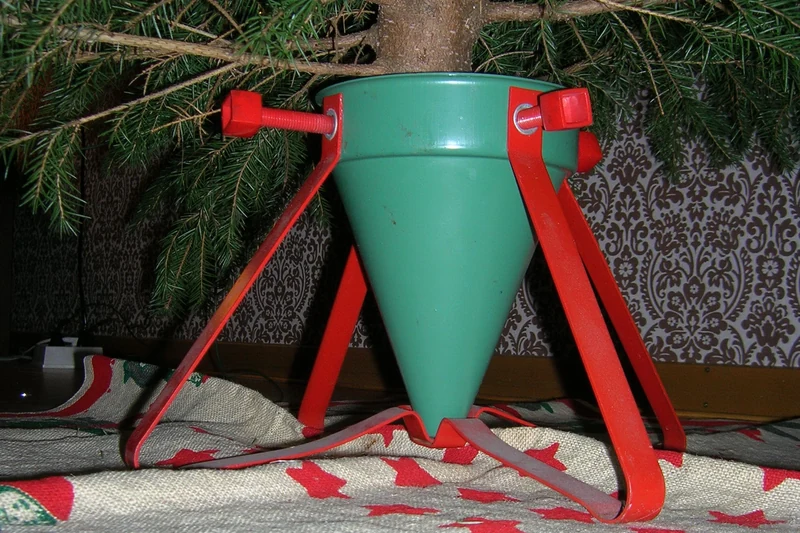
The stand matters more than almost anything else you buy. It should hold about one quart of water for every inch of trunk diameter, and most trees need a stand that holds at least a gallon. A bigger reservoir is a real advantage, because you can go a day without it running dry.
Also look for:
- A ring that fits the trunk without shaving it.
- A wide, stable base, so the tree does not tip.
- A bowl you can see into, so you can check the water without lying on the floor.
Check the stand against the trunk before you leave the farm. Many farms sell stands and will help you choose one.
How much water does a tree drink?
More than you expect, especially at the start. In the first week or two, a tree drinks the most, and then it slows down. A good planning number is about a quart a day for every inch of trunk diameter. A trunk 3 inches across drinks around 3 quarts a day, and a big, thirsty tree can take a gallon on the first day.
So check the stand every morning, not just once in a while. Keep the water level above the base of the trunk. Be careful: in some stands, water remains in the bowl even after the trunk is no longer touching it, so look at the trunk, not just the water.
If the tree seems not to drink at first, be patient. A very dry tree, or a very cold one, can take a day or two to start drinking.
What can you put in the water? Myths and what works
The short answer is nothing. Plain water is all a tree needs.
| Myth or tip | Does it help? | What to do instead |
|---|---|---|
| Sugar, corn syrup or honey | No | Use plain water. |
| Aspirin | No | Skip it. It can also be unsafe for pets that drink from the stand. |
| Bleach | No | Wash a stand before you use it if you like, then rinse it well and fill it with plain water. |
| Soda, vodka or other drinks | No | Save them for the grown-ups. |
| Commercial preservatives and fresheners | No better than plain water | Spend the money on a bigger stand. |
| Hot water | No. Water temperature does not change how much a tree drinks. | Use cool or room-temperature tap water. |
| Drilling a hole in the trunk | No | Make a fresh straight cut. |
| Shaving the bark off the sides | No, it can hurt | Choose a stand that fits the trunk. |
| Water-holding gels | No, and they can reduce the water the tree can reach | Use plain water. |
| Sprays that claim to hold in moisture | Little or nothing | Keep the stand full. |
| Flame-retardant sprays | Not as much as water, and some can damage needles | Keep the tree watered. |
A watered tree is a much safer tree. Moisture does more to protect your home than any spray.
What about misting the tree?
Misting is not a substitute for water in the stand, and it does not give the tree what it needs. A tree drinks through its trunk, not through its needles. Spraying the branches can make a mess, and it is a poor idea around plugged-in lights. Put your effort into the stand instead.
Where should the tree go, and how warm should the room be?
Heat is the tree’s enemy. A warm room makes a tree dry faster and drink more water every day.
- Keep it away from heat sources: fireplaces, wood stoves, heating vents, radiators, space heaters and direct sunlight.
- Keep the room cool if you can. A cooler room slows drying and cuts down the water the tree uses each day. Lower the thermostat a few degrees.
- Moister air helps. Lower temperatures and higher humidity both reduce moisture loss.
- Use LED lights. They give off much less heat than older bulbs. Turn them off when you leave the house or go to bed.
- Leave space around it. Do not block an exit, and keep it at least three feet from anything that gets hot.
Can you store a tree before you set it up?
Yes. If you bring the tree home a few days early, keep it in a cool, shady, protected spot such as an unheated garage, a shed or the shady side of the house, out of the wind and sun. Trees dry quickly on warm, windy days with direct sun.
Make a fresh cut across the bottom, then stand the trunk in a bucket of clean water. When it is time to bring it in, make another thin cut right before you put it in the stand if the trunk has been out of water for more than a few hours.
Give the branches a few hours to open up before you decorate.
Does the kind of tree change how you water?
Not much, but a few kinds are worth knowing about.
- Fraser and Canaan firs can drink more than other trees at first, so top the stand off more than once on the first day.
- Blue spruce keeps its needles well only if it never runs out of water. After one dry spell, many needles fall, and they do not come back.
- Norway and other spruces lose needles faster than firs or pines, so they depend on a full stand even more.
- Scotch pine holds its needles even when it is dry. The needles are not a good guide to its water, so look at the stand instead.
- Leyland cypress dries faster than Fraser fir. Cut it at the farm and get it into water the same day.
Whatever the species, the routine is the same: a clean cut, a full stand and cool surroundings.
What if the tree stops drinking?
Sometimes a tree sits for a day or two and the water barely moves. That is not always a problem. A very dry tree, or a very cold one, can be slow to start. Give it a day or two and keep the stand full.
If it still does not drink, and especially if the stand ran dry, the cut has probably sealed. The fix is a fresh straight cut across the bottom. If the tree is bare, this is easy, so do it right away. If it is already decorated, you may decide to lift the tree out, trim and replace it, or to take down the heaviest ornaments first. Drilling holes in the trunk does not solve the problem, so skip that trick.
How will you know if the tree is too dry to keep?
Run your fingers along a branch. Fresh needles are pliable and stay put. If the needles are dry and brittle, break easily or come off in your hand, the tree is too dry. Other signs include heavy needle drop from the outer branches, a dull color and a stand that stops getting emptier because the cut has sealed.
If the water ran out for half a day or more, the tree may have stopped drinking. An undecorated tree can come out of the stand for a new cut. A decorated one is harder, so the best fix is to prevent it by checking the water daily.
Once a tree is truly dry, it is time to retire it. A dry tree catches fire easily, so take it down, get it out of the house and recycle it. A tree that is watered daily can stay moist and safe for several weeks.
A simple daily routine
- Look at the stand each morning and top it off with plain water.
- Check that the water is above the bottom of the trunk.
- Give a branch a gentle pull. If needles stay put, you are doing great.
- Turn off the lights when you go out or go to bed.
- Smile at your tree.