Evergreen Guide Buying a tree
How Much Does a Real Christmas Tree Cost?
Seven-foot tree examples from $84 to $150, plus the small details that can change your bill.
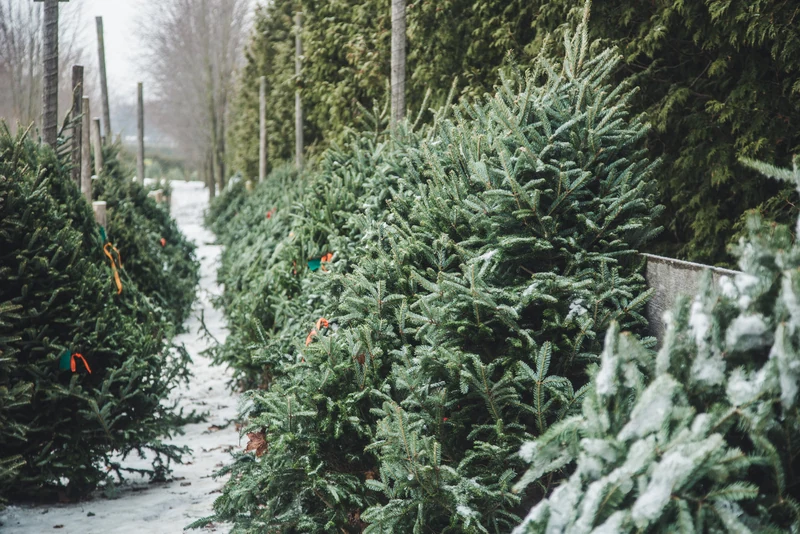
For a seven-foot Christmas tree, the farm examples below work out to about $84–$150, depending on the species, pricing method and what’s included. Some include tax; others add it. These are specific published farm offers, not a national average, but they’re a useful place to start your budget.
The tricky part is that two farms can advertise quite different prices and still leave you with similar bills. One includes baling and a hayride. Another charges for baling separately. And a per-foot price needs a little arithmetic before you know whether that lovely fir is coming home with you.
Here’s how to compare them before anyone gets attached to the tallest tree in the field.
What a seven-foot tree could cost
These examples come from farm websites checked October 29, 2026. The per-foot calculations assume a tree measured at exactly seven feet. They’re planning figures; the farm’s measuring rules and individual tree tags determine what you pay.
| Farm and location | Published offer | Seven-foot planning figure | Tax and conditions |
|---|---|---|---|
| Bacon's Christmas Tree Farm, Bremerton, Washington | Douglas fir under 12 feet: $12 per foot | $84 | 2026 price includes tax; baling costs extra. |
| Bacon's Christmas Tree Farm, Bremerton, Washington | Noble, Nordmann, Grand, Spruce and Other category under 12 feet: $14 per foot | $98 | 2026 price includes tax; baling costs extra. |
| Krueger's Christmas Tree Farm, Lake Elmo, Minnesota | White and Norway pine: average $12–$13 per foot for 7–8-foot trees | About $84–$91 | 2026 range, plus tax; trees individually priced. |
| Krueger's Christmas Tree Farm, Lake Elmo, Minnesota | Balsam and Canaan fir: average $14–$15 per foot for 7–8-foot trees | About $98–$105 | 2026 range, plus tax; trees individually priced. |
| Krueger's Christmas Tree Farm, Lake Elmo, Minnesota | Fraser fir: average $15–$16 per foot for 7–8-foot trees | About $105–$112 | 2026 range, plus tax; trees individually priced. |
| Hansen Tree Farm, Ramsey, Minnesota | Choose-and-cut field trees: $150, any size or species | $150 | Posted alongside the 2026 season information; tax treatment isn't stated on the pages checked. Pre-cut trees have separate prices. |
Sources: Bacon’s 2026 pricing, Krueger’s 2026 tree chart and Hansen’s prices and services.
These farms sell different trees and different outings. Treat the figures as examples of how pricing works, rather than a contest between farms hundreds of miles apart.
Per foot, per tree or a price on the tag?
A per-foot price is easy enough to work with: multiply the tree’s measured height by the rate for that species and size. At $12 per foot, seven feet comes to $84. Eight feet comes to $96. That extra foot adds $12 before any other charges.
Check the height brackets, though. A rate advertised for an ordinary living-room tree may not apply to a much taller one. Krueger’s says its per-foot prices increase above nine feet. Bacon’s has a separate $15-per-foot bracket for trees from 12 to 15 feet. Don’t carry the smaller-tree rate into a tall-tree calculation.
Flat pricing takes height arithmetic out of the shopping. Hansen charges $150 for its choose-and-cut field trees regardless of size or species. That’s helpful if you want to know the tree price before setting off, but it also means choosing a shorter field tree won’t lower that particular bill.
An individually tagged tree needs a slightly different approach. At Krueger’s, the published per-foot figures are averages for seven-to-eight-foot trees; species, height and shape affect individual prices. Use the chart to decide whether the farm looks suitable for your budget, then check the tag before choosing your tree.
What does the tree price include?
A little help with the awkward bits can be worth paying for. Before comparing totals, check whether the farm includes a saw, shaking, baling, drilling for a compatible stand and help loading your vehicle.
At Hansen, the field-tree purchase includes shaking, baling and tying the tree onto your vehicle. Its advertised outing also includes cocoa, cider and hayrides, with Christmas sausage served on weekends. Those details may matter if you’re planning a leisurely family visit. If you simply want to choose a tree and head home, you may value a different offer.
Bacon’s lists a small additional baling fee without publishing the amount on its choose-and-cut page. Include that question in your planning if you want the tree wrapped for the journey.
Also check admission and reservation terms. Does a booking payment go toward the tree, or is it a separate charge? Are activities included for your whole group? A low starting tree price won’t answer either question.
Does cutting your own tree save money?
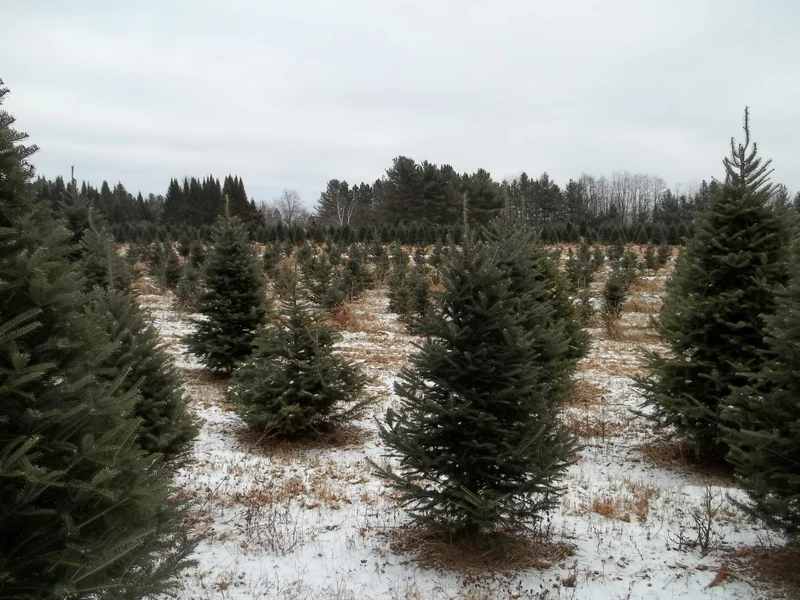
It can, but don’t assume it will. Compare the two buying formats at the farm you’re considering, with the same species and size in mind.
Hansen is a useful example: its field trees have the $150 flat price, while its pre-cut page lists a separate $75–$200 range for five-to-ten-foot trees, priced by the foot with adjustments for quality. That range doesn’t tell you the price of a particular seven-foot pre-cut tree. It does show why “pre-cut costs more” is too simple a rule.
Choose the field visit because you want to walk among the trees and cut one, or choose pre-cut because that suits your day. Then compare the actual offers. There’s no need to turn a short shopping trip into an afternoon in the field just because it sounds like the cheaper option.
What about a $50 Christmas tree?
Lower posted prices do exist. Camp’s Christmas Forest in Sweetwater, Tennessee advertises all trees at $50, payable by cash or check.
There’s a seasonal wrinkle: when checked, its homepage still displayed a 2025 closure notice alongside a message about returning Black Friday 2026. The $50 offer wasn’t explicitly dated for the new season, so confirm it before budgeting a 2026 trip. The farm directs visitors to its Facebook page for current hours and closes when its annual tree allocation sells out.
An older price can be a useful lead. It shouldn’t become a promise for this Christmas.
How to keep the total comfortable
Start with the space you actually have. Measure the available height for the tree, stand and topper together, then check the floor width. The National Christmas Tree Association’s selection guidance recommends measuring both height and width before shopping. Knowing your limit makes it easier to walk past a gorgeous tree that would require moving the sofa into the kitchen.
Next, decide what you want to spend on the tree itself. Keep that separate from a new stand, wreath, refreshments or other purchases. If you already own a stand, check that it suits the size of tree you’re buying before adding another one to the bill.
Compare species within your local options. Krueger’s published chart puts pine below several fir categories, for example, but that relationship belongs to its price list; it isn’t a rule for every farm. If you’re flexible about species, check the alternatives before settling on one.
Finally, compare the whole journey. Include fuel and any separate fees before driving farther for a lower advertised tree price. A nearby farm with the services you need may be the easier choice even when its tree costs a little more.
Before you head to the farm
A few answers will settle most of the budget:
- What will your preferred species cost at the height you need?
- Is that an exact tagged price, an average or a starting price?
- Are tax, baling and loading included?
- Does a reservation or admission payment add to the total?
- What payment methods are accepted, and are there card fees?
Once those are clear, you can put the calculator away. Find Christmas tree farms near you, compare their visit details and choose somewhere that suits your budget and the kind of day you want. Leave a little room in the car, too.